I build these platters several times a month, mostly for four people and always from whatever the market had that morning, so the six tips below are the arithmetic and the shortcuts rather than a fixed shopping list. They assume a normal kitchen, a budget of around 25 euros for the whole table, and guests who will eat standing around the counter for the first twenty minutes. Read them in order and the last one does most of the work.
Tip one: count plates, not ingredients
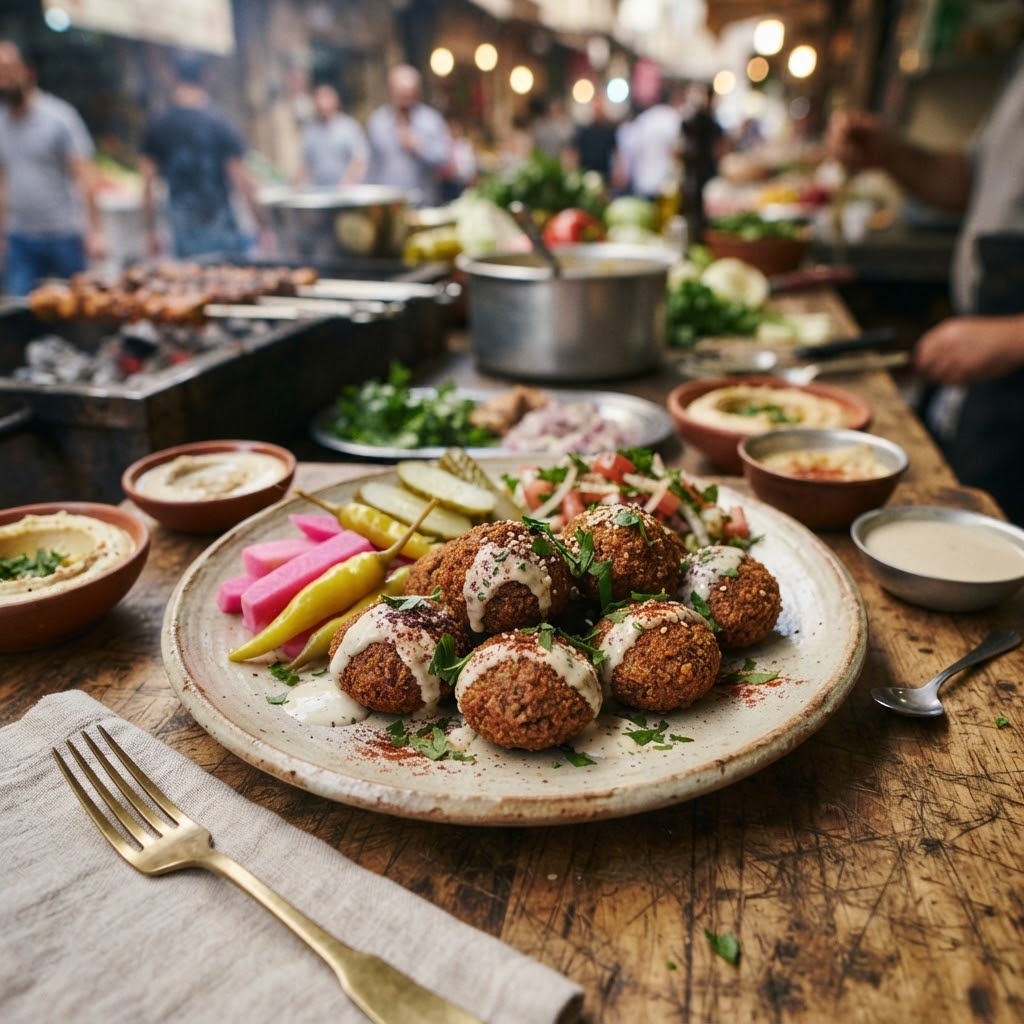
Plan four or five small plates for four people and seven or eight for a table of six, because the pleasure is in the number of dishes rather than the quantity of food. Two generous bowls plus a basket of bread reads as a snack, while six small dishes at half the volume reads as an evening. Write the number down first, then fill it, and resist adding a seventh once the table is full.
Volume follows the count rather than the other way round. A single bowl of olives at 300 grams disappears in ten minutes among four people, while the same weight spread across two small dishes gives the table two separate moments.
Tip two: build around bread and two dips
Everything on the platter exists to be carried by bread, so buy the bread last and choose it fresh the same day. Two dips are enough: one tahini or yoghurt based, one aubergine or pepper, and both should come to the table at room temperature, because cold hides garlic and warm turns them runny.
- Tzatziki or labneh for the cool, salty, garlic end.
- Smoked aubergine or roasted pepper for sweetness and colour.
- Warm flatbread or pita, wrapped in a cloth so it stays soft.
Buy the bread from somewhere that sells out by mid-afternoon. A bakery with an empty shelf at five tells you what the good loaves did at noon, and stale bread under a good dip is the fastest way to waste both.
Tip three: balance the textures on purpose
Four textures cover a whole table: creamy from the dips, briny from olives or anchovies, crisp from something fried, and soft from a warm vegetable or grain dish. If two items are creamy, one of them is redundant, and guests will eat only the fried plate unless something green sits next to it. Look at the board once before serving and name the textures out loud; anything missing is quick to add.
Colour does the same job on the eye. A platter of beige tastes flatter than it eats, so a bowl of herbs, a jar of pickled chillies or a spoon of paprika oil fixes it without adding a single new ingredient.
Tip four: buy three things and cook two
The deli counter is your ally: olives, cured anchovies, good feta and a shop-made dip cost a few euros each and save an hour. Cook the two things that benefit from your pan instead, because a bowl of warm chickpeas or fried courgette bites makes the whole platter taste cooked rather than assembled.
- Buy: olives, cheese, anchovies or cured fish, one dip, and bread.
- Cook: one fried item and one warm vegetable or pulse dish.
- Finish: lemon, olive oil, paprika and a scatter of herbs over everything.
Tip five: send it out in the right order
Cold plates go down first while the kitchen finishes the hot item, and the fried thing should land last so it is still crisp when hands reach for it. Put the bread in the middle at the start and refill it once, because an empty basket ends an evening faster than an empty plate. If guests arrive in stages, keep the warm dish covered and add it to the centre when the group is complete.
Clear nothing between rounds. The empty plates are part of the table, and stacking them in the kitchen tells your guests the evening has moved on before they have decided that themselves.
Tip six: pour something simple and leave the rest
A dry white, a light red or a cold beer all sit beside these plates without arguing with them, and a jug of house-style wine for four people costs less than two glasses at a bar. Water with lemon on the table keeps everyone eating longer than a second bottle would. Of the six, the plate count and the texture balance are the two I would keep; get those right and the rest of the platter arranges itself.