I started Meze Atlas after fifteen years of eating my way through port cities, back alleys and market halls, mostly on short trips where dinner was the whole point of the journey. The pattern I kept noticing was simple: the dishes that travel well are the shared ones. A plate of something small, set down in the middle of the table, tells you how a kitchen thinks, what the region grows, and how people here like to spend an evening. Landmarks impress for an hour. A table of small plates teaches you the place.
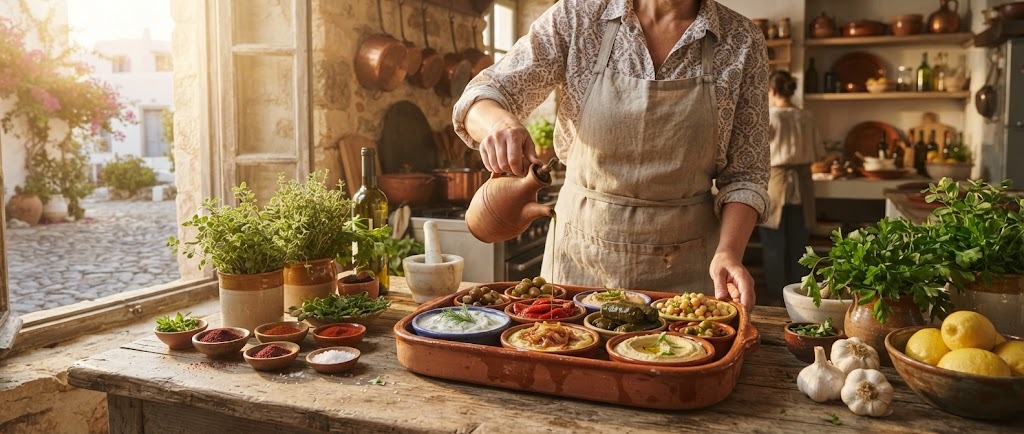
Since then the guide has covered 26 countries and more than 400 kitchens, and every one of them has been checked by the writer who filed the piece: we pay our own bills, order at least four plates before judging a room, and go back at a different hour if the first visit felt like a fluke. Nothing here is ranked by who paid us, because nobody pays us.
How we research
Each guide starts with a market or a single dish, not a listicle. The writer walks the neighbourhood, talks to whoever is behind the counter, and prices the order in local currency and in euros so the numbers still mean something next year. Recipes are tested in a normal home kitchen with ordinary equipment, because a dish that only works with a professional range is not a dish you can make.
What you will find here
- City and regional food guides built around what to order first, not what photographs well.
- Recipes for the shared dishes: dips, fried bites, braises and the bread that carries them.
- Drink notes for the wines, sherries and small-batch spirits that sit beside the food.
- Practical detail: opening hours we verified, price ranges, and which hours to avoid.
What we promise
Straight opinions, updated pages when a kitchen closes or a recipe changes, and no affiliate padding dressed up as advice. If a place has gone downhill since we published, the page says so. If a cheap counter beats the famous dining room, we write that too, with the price next to it.