A tray of red peppers goes into a hot oven and forty minutes later you have the base for three completely different dips. That is the whole appeal of this dish: one cheap ingredient, one simple technique, and a result that changes completely depending on what you add at the end. Peppers are at their best from late summer through autumn, they roast without any attention, and the dips keep for days, which is why a tray tends to appear in my kitchen every week without being planned.
The versions below are the ones I make most often. They share the same roasted base and split at the blender: one goes nutty with tahini, one goes deep with walnuts and pomegranate, one gets smoke and yoghurt. All three sit on the same table with bread, which is how they should be served - in the middle, with people reaching across for them.
Why the roast matters
Raw peppers taste green and sweet in a flat way. Roasting does two things at once: it drives off water so the flesh concentrates, and the skin blackens against the tray, which adds a faint bitterness that keeps the dip from tasting like dessert. You are not trying to burn the peppers to a crisp. You want patches of dark blistering across the top and a collapse in the structure, so that the flesh slips out of the skin with almost no effort.
- Use peppers that feel heavy for their size and have smooth skin; wrinkled peppers are already losing water.
- Whole peppers, stem left on, cut side down on a lined tray - no oil needed at this stage.
- High heat, around 220C, until the skins blister and the bodies slump.
- Steam them in a covered bowl for ten minutes afterward; that is what makes peeling quick.
- Save the roasting juices. They are the seasoning the dip needs most.
Roasting and peeling, step by step
- Heat the oven to 220C and line a tray with baking paper so the sugars do not weld to the metal.
- Halve the peppers, pull out the seeds in one piece, and lay them cut side down.
- Roast 25 to 35 minutes, rotating the tray once, until the skins are blackened in patches and the flesh has slackened.
- Tip everything into a bowl, cover it, and leave them to sweat for ten minutes; the steam loosens the last of the skin.
- Peel over the bowl so the juices collect, then let the flesh drain for a couple of minutes if it looks watery.
Do not rinse the peppers under the tap to remove the skin. Water flattens exactly the flavour you just spent half an hour building, and it makes the dip loose. Peel by hand, catch the juice, and use it.
Version one: tahini and lemon
This is the everyday dip, the one that disappears first. Put the roasted flesh, two tablespoons of tahini, a small crushed garlic clove, the juice of half a lemon and a pinch of salt into the blender. Blitz, then add cold water one tablespoon at a time until the mixture lightens and turns creamy rather than stiff. Cold water is the trick - it emulsifies the tahini and takes the paste from beige and heavy to pale and airy. Taste for salt and lemon; the peppers are sweet, so it usually wants more of both than feels right the first time.
Version two: walnut and pomegranate
The second version is richer and darker. Add a small handful of walnuts, half a teaspoon of ground cumin, a teaspoon of pomegranate molasses and a spoon of the roasting juices instead of water. Blend until it is smooth but still has a little grain to it, then taste. Pomegranate molasses is sharp and almost bitter on its own and perfect here: it cuts through the sweetness of the peppers rather than adding more of it. If you cannot find it, a splash of red wine vinegar plus half a teaspoon of honey gets you close.
Version three: smoke and yoghurt
For the third, fold roasted peppers into thick yoghurt after blending rather than blending everything together, and add a quarter teaspoon of smoked paprika and a drop of olive oil. The texture stays looser and cooler, which makes it the right one for a hot evening or as a side next to grilled meat. Use yoghurt you would eat on its own, strained if it is runny; a watery base will weep onto the plate within the hour.
Serving, storing and what goes beside it
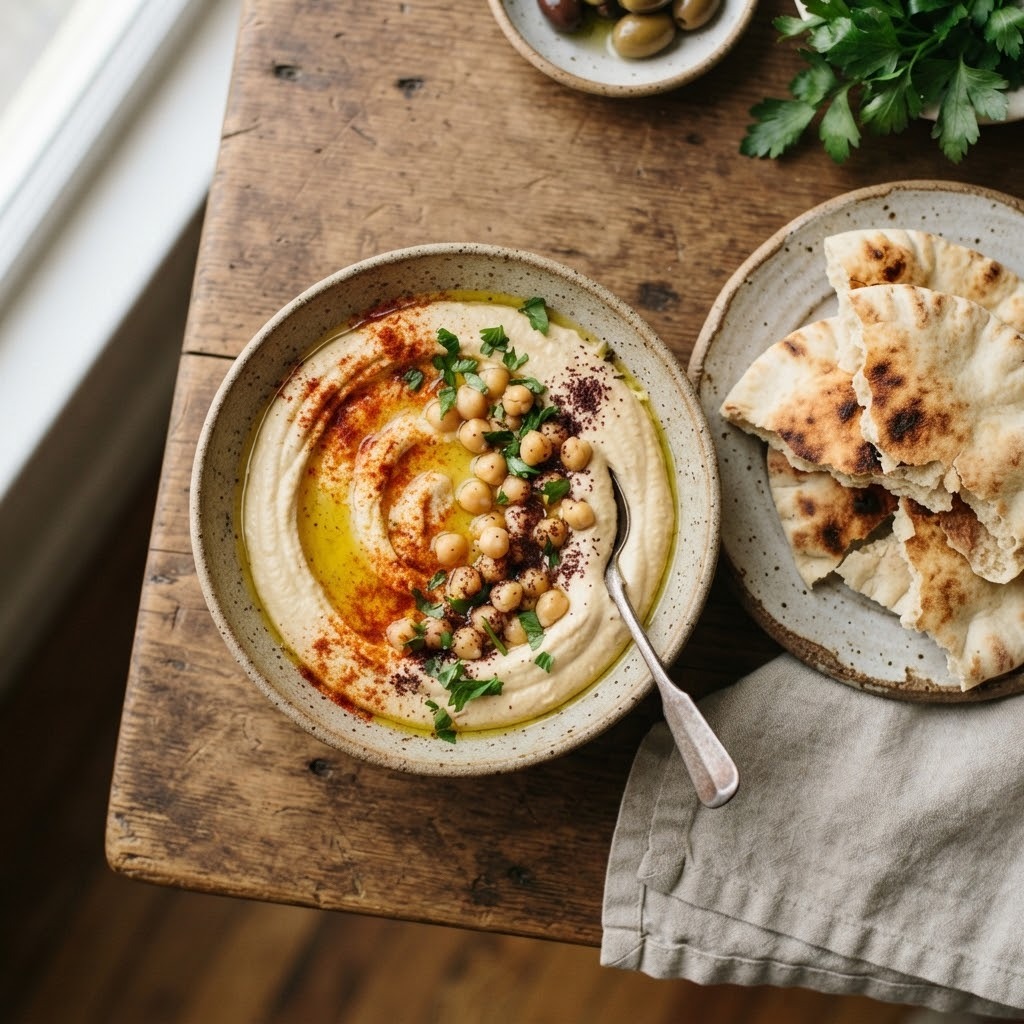
Room temperature, never straight from the fridge - cold mutes the garlic and the cumin. Make a shallow well in the middle, pool good olive oil in it, and finish with something to chew: toasted pine nuts, cracked walnuts, or a scatter of herbs if you have them. Alongside, the usual suspects work best: flatbread straight from the oven, crudités for contrast, and something grilled to turn the dip into a meal.
- Keeps four days covered in the fridge; the colour dulls slightly and comes back with a stir.
- Freezes well without the yoghurt version; thaw in the fridge and re-blend.
- Doubles cleanly if you have a tray of peppers to use up, but add liquid gradually.
- Great on toast the next morning with an egg on top, which is the real reason I roast more peppers than I need.
That last point is worth underlining. The dip is not a project. It is a way of turning a tray of cheap vegetables into something that covers three meals: dinner with bread, lunch in a wrap, and breakfast on toast. Roast when the peppers are good, keep the ratios above as a starting point, and adjust the acid until the sweetness of the peppers has something to push against.