The first choice at a Greek taverna is not which dish looks good. It is whether you are ordering two plates for two people or building a table of shared dishes, and everything after that follows from the answer. Fifteen years of eating in family rooms from Thessaloniki to the small harbours of the Cyclades taught me that my meals worth remembering are assembled in a fixed order: bread and dips, something fried, whatever is on the grill, vegetables, and only then dessert.
What follows is the working version of that order, with prices, timings and the small customs that confuse first-time visitors. Dish names appear in plain English so you can point at the menu without mangling the Greek.
Start at the cold counter
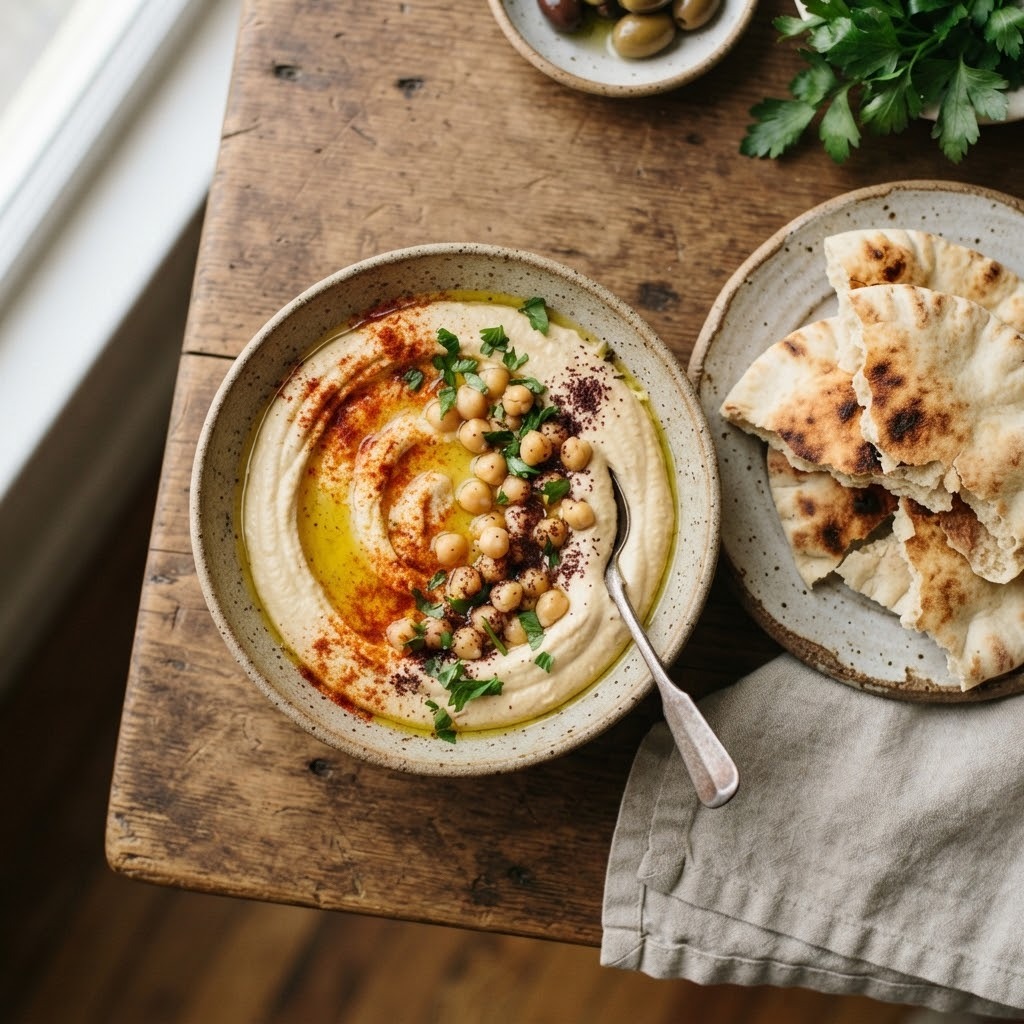
If the room has a refrigerated display near the door, walk to it before you sit. Cold plates are chosen by eye, they arrive in minutes, and a good spread tells you more about the kitchen than any written menu. Order three for two people and add to them later, because nobody here is counting courses.
- Tzatziki: thick yoghurt, grated cucumber, garlic and good olive oil. It should hold its shape on the bread rather than run.
- Fava: yellow split pea puree, served cold with onion and capers.
- Melitzanosalata: smoked aubergine, rough rather than smooth, with a sharp edge of lemon.
- Taramosalata: fish roe whipped with oil. Pale versions taste better than the dyed pink ones.
- Dolmades: vine leaves rolled around rice and herbs, plain or in a lemon sauce.
Bread and covers come first
Bread arrives without being asked and it is not free. Most tavernas charge a small cover per person, usually between one and two euros, which covers the bread and the table salad if there is one. Ask if you are unsure; the answer is almost always yes, and haggling over one euro is the fastest way to get cold service for the rest of the meal.
Wine comes in carafes measured by the quarter, half and full litre, red or white, at four to seven euros for a half litre. House wine is made within a few kilometres of the table in almost every region, so it is the sensible order. Bottles exist, they cost about triple, and they are rarely the more interesting glass.
Hot plates, in the order the kitchen sends them
Fried dishes arrive first because they wait badly: calamari, small fish, courgette fritters, cheese pies. Then the grill takes over with lamb chops, biftekia, chicken thighs, and octopus that should come charred at the edges and tender in the middle. Vegetables follow whenever the pan is free, which is usually later than you expected.
Fish is the exception to ordering from a menu. In harbours it is sold by weight, displayed on ice or written on a board with today's price per kilo. Ask what a whole fish weighs before it goes on the scale, confirm the price out loud, and have it grilled simply. Anything above thirty euros a kilo should be explained to you rather than assumed.
What the meal should cost
A realistic dinner for two in a provincial taverna runs forty to sixty euros: three cold plates, one fried dish, a main from the grill, a half litre of wine and bread. In Athens and Thessaloniki add ten to fifteen. Islands with a marina add more, and some menus stop printing prices for fish entirely, which is a signal to ask before you order instead of after.
- Cold plates: four to seven euros each.
- Fried starters: seven to eleven.
- Grilled meat mains: ten to fifteen.
- Whole fish: market price per kilo, confirmed first.
- Half litre of house wine: four to seven.
Choosing the room
Arrive at seven in the evening and you get a choice of tables and a kitchen that is not yet under pressure. Arrive at nine in July and you wait behind three other groups. Look for three signals: a handwritten menu or chalkboard, turnover between the door and your table, and a mix of ages at the other tables.
Rooms with laminated photo menus in four languages are selling to whoever walks past, and the grill usually proves it. Opening hours also split the town in half: some kitchens close between lunch and dinner, sometimes from three until half past seven, so a long lunch can leave you with nothing but a kiosk for hours.
Dessert, spirits and paying
Dessert is optional and rarely ordered by Greeks in these rooms. If you want one, loukoumadi are fried dough balls soaked in honey, and galaktoboureko is custard under filo, both arriving warm for four to six euros. After the plates are cleared somebody may offer a small glass of tsipouro or mastiha; declining costs nothing, and accepting it usually costs nothing either, since many places pour it as a gesture.
The bill comes when you ask for it, never before, and cards are accepted almost everywhere except the smallest harbour rooms. Cash still smooths the evening in villages, so keep forty euros on hand for a meal that came to fifty.
Order the first night this way
Walk in, point at three cold plates, ask for a half litre of white, and then ask what came off the grill that afternoon. The last question is the whole method: it moves the conversation to today's cooking, gets you whatever is freshest, and tells you within a minute whether the person behind the counter knows their own kitchen. Everything after that first evening can be improvised from what you learn at that table.